
 Francis Wambugu Irungu
 Cyrus Jirongo, the veteran Kenyan politician and former Cabinet Minister, was laid to rest on December 30, 2025, in a private ceremony at his Lumakanda farm in Lugari Constituency, Kakamega County. The event, marked by deep mourning, cultural rituals, and fiery political discourse, drew family, close friends, clergy, and select leaders, while barring most politicians from the graveside interment.
Jirongo, aged 64, had died on December 13, 2025, in a tragic road accident on the Nairobi-Nakuru Highway near Naivasha, succumbing to blunt force trauma, a death that sparked widespread suspicion and calls for fresh investigations.
The funeral service unfolded at Lumakanda Primary School grounds, with a prior memorial service on December 26 at CITAM Valley Road in Nairobi set a reflective tone, honoring Jirongo’s legacy as a business magnate, multiparty democracy pioneer, and infrastructure advocate. Preparations at his Goseta home emphasized a dignified send-off, blending Christian rites with Luhya traditions.
Clergy dominated the podium, leading prayers, worship, and eulogies that celebrated Jirongo’s life rather than dwelling solely on loss. His son read a family eulogy, framing the occasion as a celebration of a man who bridged divides and championed development, including roads like Lumakanda-Manyonyi. Yet, the service quickly pivoted to politics, with opposition unity on vivid display amid 2027 election whispers.
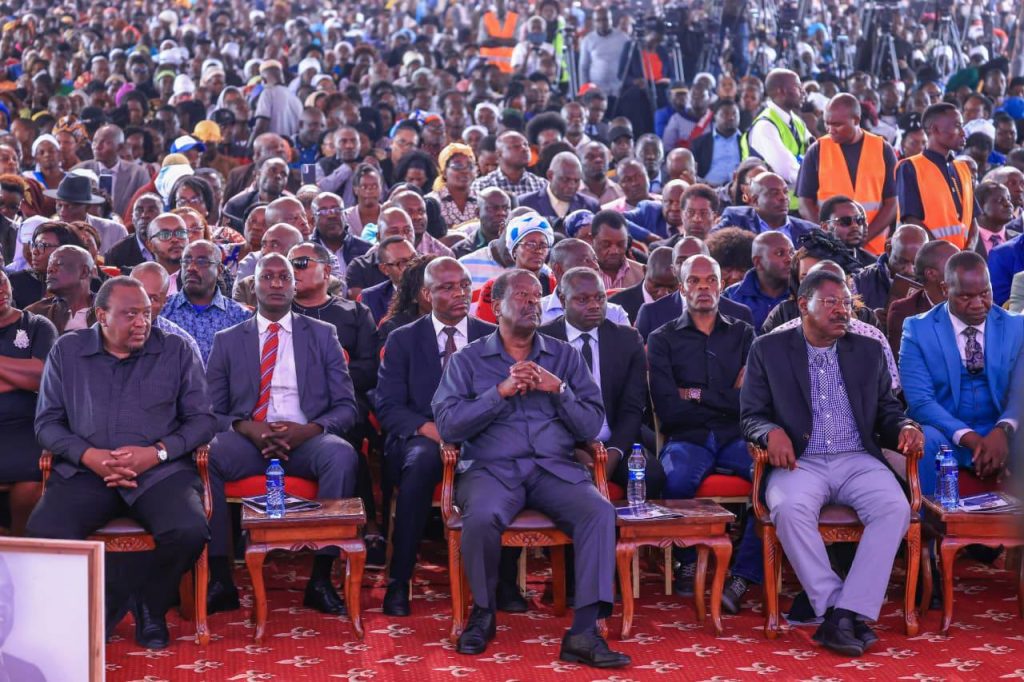
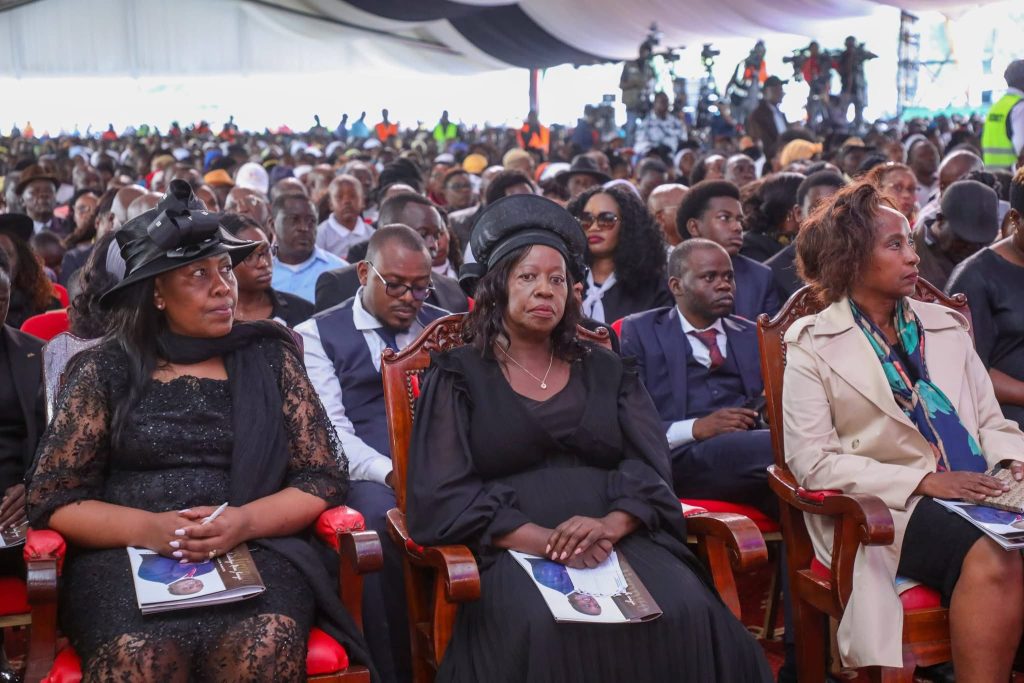
Former President Uhuru Kenyatta delivered a powerful, emotional speech, eulogizing Jirongo as a respectful adversary in the multiparty struggle and a unifier who prioritized national progress over tribalism. Kenyatta lamented the loss of a potential presidential contender, urging Kenyans to emulate Jirongo’s infrastructure contributions and peace-building ethos.
“He was a man of courage. He respected the political space that was created in this country with a lot of struggle, Siras aliheshimu wote!” Kenyatta stated, urging mutual respect and unity over divisive politics. He added, “Kwa ndugu yangu nasema lala salama,” bidding farewell while pledging family support
Nairobi Senator Edwin Sifuna blasted President William Ruto’s administration, declaring, “Hakuna haki tutapata kwa serikali ya William Ruto juu ya maisha ya huyu ndugu… Wale waliuwa Jirongo wamekaa hapa, wanaskiza mkiitisha haki!”, questioning the accident narrative, he also noted that opposition parties would not be intimidated ahead of 2027 and slamming efforts to dismantle political pluralism.
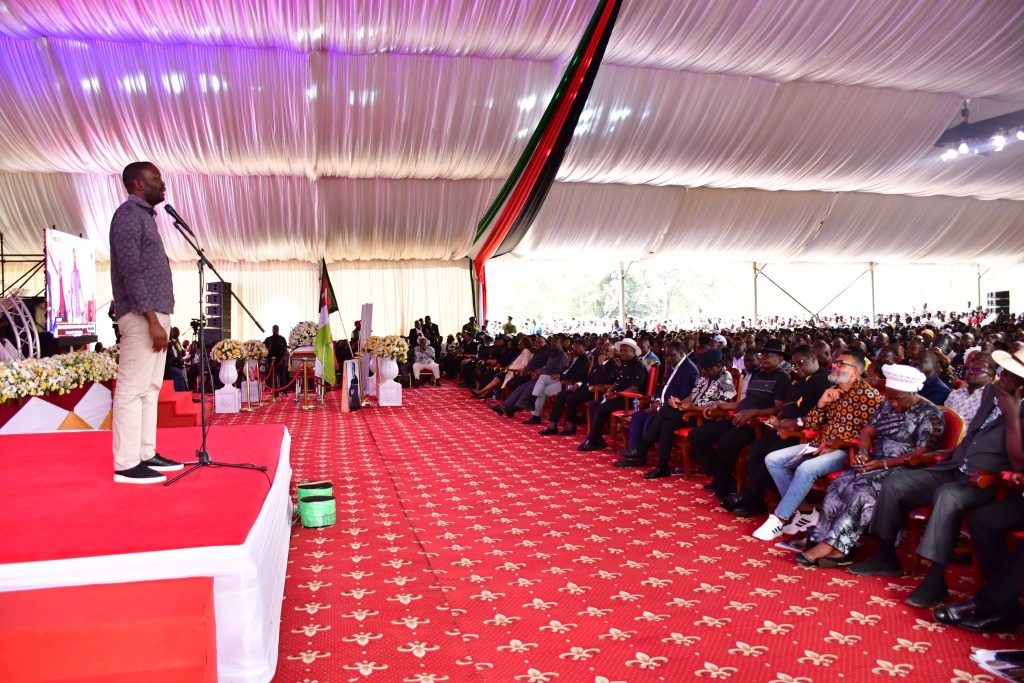
Senator Boni Khalwale added drama with a controversial Tiriki Luhya torch ritual at the burial site, using chants and a spotlight to invoke truth and justice for Jirongo’s death, dismissed by some as non-traditional but defended as a cultural summons for accountability.
Khalwale recounted Jirongo’s financial backing for Luhya campaigns, pushing for regional political cohesion. He challenged National Assembly Speaker Moses Wetang’ula directly: “Before Ruto fired me, our offices were close. I saw you going in with Jirongo, talking a lot. Tell us what it was about… Either business or politics killed him. Tell us what you planned.” Khalwale also questioned police inaction, comparing it to swift probes in other cases.
Emotions peaked as leaders like Fred Gumo rejected police reports, demanding forensic probes and dismissing accident claims outright.
The event sressed simmering tensions: a private burial walled off politicians highlighted family control amid public clamor, while speeches wove personal tributes with broader critiques of governance. Jirongo’s death, framed by some as suspicious, fueled narratives of political elimination, with unity calls contrasting government distrust.
Attendees mourned a colossus whose youth wing activism evolved into ministerial stature and business empire, leaving a void in Western Kenya’s political landscape.
In Lumakanda, the torch’s glow highlighted unresolved questions. Jirongo’s funeral sparked debates on justice and unity that echo into 2027.


